

 Joe Dinga Pefok (Uncle Joe)
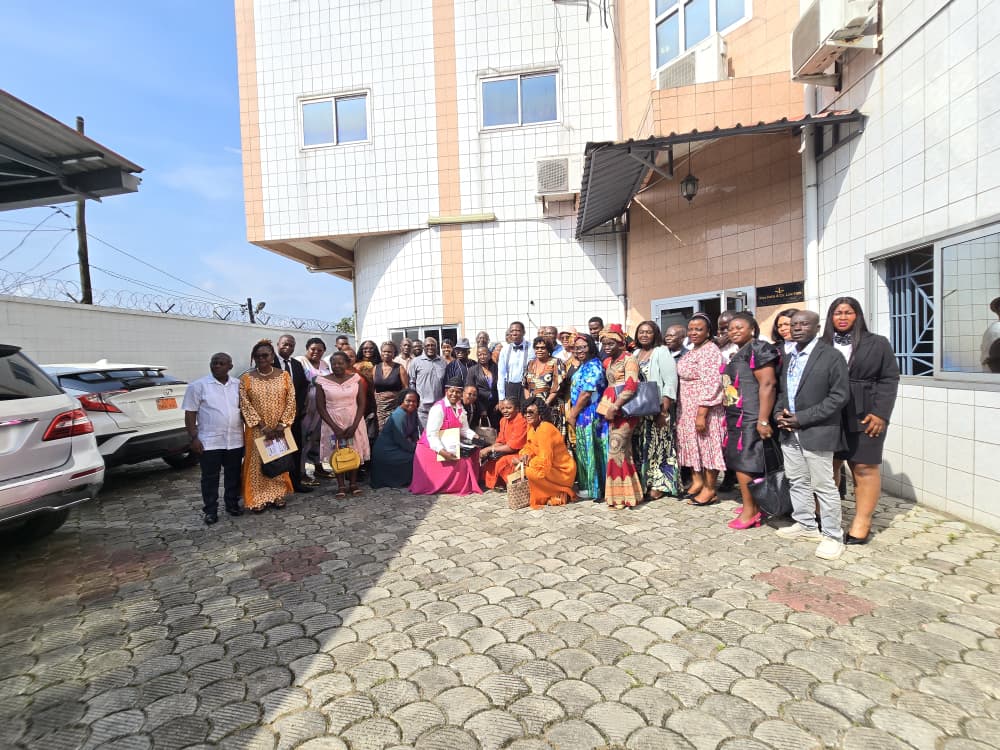
Participants At The Seminar, Which Was Organized For Free, Were Sensitized On The Importance Of A Will, How It Is Properly Done, And Executed. They Learnt That A Will Can Be Modified Or Updated, Revoked, Rewritten, And Even Contested Or Challenged. Participants Learnt That The Execution Of A Will Can Only Be Done After The Testator Is Dead, And What Happens To Children Born Out Of Wedlock In The Sharing Of Property, What Happens When A Man Dies And The Will Is Not Found. Etc.

The conference room of the Nico Halle & Co Law Firm at Shalom Building ‘Ancienne Route’ Bonaberi –Douala, was jammed to capacity on Friday, November 6, 2026, by anxious participants at an important seminar organized for free by the Law Firm of Sir Dr Barrister Ntumfor Nico HALLE, for Christians of the Bonaberi –Congregation of the Presbyterian Church In Cameroon (PCC), and a few other invitees from the PCC outside the Bonaberi Congregation. Due to the problem of space, the invitation was limited to some 60 participants.
Worthy of note, that the Nico Halle & Co Law Firm In Douala is not only one of the biggest Law Firms in the country, but it is also a bilingual law firm. There are both Anglophones, and Francophone lawyers, or better still, lawyers of the Common Law and Civil Law, at the Nico Halle & Co Law Firm. And so participants at the November 6, 2026 seminar that was organized by the Nico Halle & Co Law Firm were fortunate to have the opportunity to listen to presentations, as well ask questions, to resource persons (lawyers), with backgrounds in Common Law (English System), and those with background in Civil Law (French System).
Sir Dr Barrister Ntumfor Nico Halle, who has both the mastery and wealth of experience in practicing, as well as in teaching Law, was the Moderator of the seminar. At the end of each presentation, or after a response to a question, Nico Halle either chipped in additional facts, or made certain clarifications, to better sensitized or enlightened the participants at the seminar.

The Theme Of The Seminar
The theme of the important seminar was: THE ESTABLISHMNENT AND EXECUTION OF FORMAL AND INFORMAL WILLS. After the opening prayer, Sir Dr Barrister Ntumfor Nico Halle welcomed participants to the seminar, and explained that though hundreds of Christians of PC Bonaberi –Douala strongly indicated their wish to attend the seminar, the Law Firm was obliged to limit the number of invited participants because of space.

As part of the presentations, Sir Dr. Barrister Nico Halle went on to give an Overview of the topic, that is, the Definition, Objectives, and Protection of a Will. Barrister Bradley MBANWIE then came up and made a presentation on: SOURCES, JURISDICTION, CHARACTERISTICS, CONDITIONS FOR A VALID WILL, and TYPES OF WILLS. Dr Mrs Francine NJEKAM talked on: CONTESTATION, REVOCATION, ALTERATION, REPUBLICATION, and REVIVAL OF A WILL. Dr. Barrister Laura NANGAH with a background in Common Law, made a presentation on: INTESTATE SUCCESSION UNDERT THE COMMON LAW JURISDICTION, while Dr. Barrister Vigiline TISE with a background in Civil Law, talked on: INTESTATE SUCCESSION UNDER THE CIVIL LAW JURISDICTION. Worthy of note that all the resource persons were from the Nico Halle & Co Law Firm.
The Importance Of A Will
Sir Dr Barrister Ntumfor Nico Halle stressed the importance of Wills, explaining that when someone passes away, a properly prepared Will gives a clear picture or directives to the family that the deceased persons leaves behind, on how he wants the estate he has left behind for the family to be managed, or how he wants the property he has left behind, should be shared. When it comes to property, the testator states what his spouse or spouses should get, what each of his children should get, and that other beneficiaries mentioned in the Will, should get. That is in a case where the man mentions other beneficiaries in his Will. Cautioning against a poorly drafted Will, the legal luminary explained that a poorly drafted Will runs the risk of being challenged or rejected, when it comes to the time for its execution, that is, when testator passes away.
Nico Halle strongly advised people, be they married (couples or spouses) or single, to always strive to prepare their Wills, and do them early enough. As the legal luminary explained, a Will is neither an invitation to death, nor is a Will written only when one thinks that he or she is about to die. But as Halle explained, nobody knows when death will strike, as death at times strikes most unexpectedly, for example, through a fatal accident, heart failure, and so on. Definitely sensing that many people are uncomfortable or are even scared to talk about the reality that all of us living today are all mortals, and will one day leave this world , Halle used himself as a Christian who knows that he is mortal, and that death can come any day and at any time.
“We Are All Mortals”
Sir Dr Barrister Ntumfor Nico halle, a legal mind and devout Christian, also explained that though in reality nobody normally wishes to die, death is not a matter of wishes, for the reality about life is that when somebody is born, it is certain that he or she will die one day die, for all human beings are mortals (From dust to dust). The senior lawyer said that is the reason why people have to face reality and know that death will come one day, and that especially as Christians, the participants at the seminar ought to know that better, and prepare for that day. Halle asserted that when a man dies without leaving a Will, he has left behind a big source of dispute, infighting, division, bitterness, hatred, and even legal battles in the family he leaves behind, over the issue of inheritance and property. He said that is why it is good for man to prepare a ground work for his family after his death, by leaving behind a Will.
The legal luminary also noted that most people leave their Wills in the safe hands of lawyers they trust, and stressed on the fact that any person keeping somebody’s Will, is supposed to make it a very secret affair, as nobody is supposed to know that he or she is keeping somebody’s Will, until after the person’s death. It was also made known that there are people who give their Wills to more than one lawyer or person, especially in the situation that somebody fears the Will might be tempered with. In such a case, the testator has to make sure that no lawyer or persons keeping the Will, knows that other persons are also keeping copies of the same Will

A Man Has The Right To Revoke, Modify Or Rewrite His Will
Meanwhile in their presentations as well as in responding to questions, the members of the Nico Halle & Co Law Firm cited above, joined Nico Halle to explain to the seminar participants that people should not be afraid to write their Wills, for fear that they can change their minds tomorrow, for somebody has the right to Modify or Amend his Will, Revoke or Annul a Will, Rewrite the Will, and so on. Revocation of a Will can be done by destroying it, or better still, dispossessing of the Will.
The legal minds also laid emphasis on the fact that, “A WILL ONLY GOES INTO EFFECT WHEN THE PERSON DIES”, and that there must also be evidence (a death certificate), to show that the testator, or the owner of the Will, has died. So if a person writes his Will, the Will cannot be executed, until after his death. Thus if somebody writes a Will and live for 50 or more years, that Will would not be executed during those 50 years or more. Also, during those years that the testator of the Will is alive, the person can also make any modifications that he wants. He can also revoke the Will, write a new Will, and so on, if he so wishes, or whenever he so wishes.
Thus if a man writes a Will and a change comes into his family like the case of ne birth, or it happens that there is divorce, or that he acquires new property along the line, he can modify or update the Will, even revoke the old Will and write a new Will, taking into consideration the new developments.
Formal And Informal Wills.
The lawyers also pointed out that not all Wills are considered valid by the Law as formal. A Formal Will is a Valid Will, while Will that is considered by the Law as not been valid is an Informal Will. The lawyers explained that the Cameroon Law for example, states that somebody is considered as matured, from the age of 18. This thus means that any Will written by somebody below 18, is not considered by Law as a valid Will.
However, the lawyers pointed out that today we live in a world where some children do great things like obtaining degrees, picking up good jobs and making money, or acquiring property, before the age of 18. As Nico Halle for example insisted, maturity is no longer a matter of age, as there are persons who are matured before 18, while there are some persons who at 25 or even above are in reality not matured. The Mentor corroborates the argument of the lawyers by pointing out that today, for example, there are young talented male and female football players and athletes, who start playing professional football, or participating in big international athletic competitions before the age of 18. So they start making big money below the age of 18, and can acquire property when they are still below 18.
The lawyers of the Nico Halle & Co Law Firm argued that there is no reason why young persons below 18, that area already making money, should not write their Wills, even if the Law does not consider the Wills as valid, simply because the testators are still under18. They explained for explain that in case of an unfortunate situation, where the young person passes away before the age of 18, leaving behind property, that Informal Will, it will help to give directives to the family of the deceased person, as to how he wants the property left behind, to be distributed or handled.

Witnesses To A Will / When A Will Is Not Found
A Will also normally has two witnesses that also signs. Participants, at the November 6 seminar, were told that the choice, for the two witnesses, depends on the owner of the Will or testator. The witnesses can be close family members or friends. But the witnesses have to be trusted or reliable persons, who will not leak out information in the Will before time.
As to who writes a Will, a person can write his Will, or better gets a lawyer to do it for him, to be sure that the Will is done in conformity with the Law, or that it meets conditions for it to be a Valid Will. As aforementioned, most people also keep their Wills with credible lawyers, for there also advantages for that, especially when it gets to the periods of execution of the Wills. Also, a person has the right to entrust his Will to one person, or to more than one person.
There are also situations where people write their Wills, but when they die, the Wills are not found. That is, nobody comes up to say that he or she was entrusted by the deceased person to keep the Will. The resource persons at the November 6, 2026 seminar that was organized by the Nico Halle & Co Law Firm, explained that in the case where somebody wrote a Will, but then the Will is not found when he dies, the Law assumes that the person along the line destroyed the Will and did not write another one, and so he did not leave behind any Will. In response to a question as to what happens when a man dies without leaving a Will, the legal minds explained that a such a case, the family of the deceased person has to apply the succession rules in inheritance, including the distribution of the property the person has left behind.
In the Bayang tradition in the Southwest Region for example, when a man dies and does not leave behind a Will, his first son automatically made the next – of – kin, even if that is not the person the deceased person would have wanted to be his successor.

A Will Can Be Challenged Or Contested
The lawyers or resource persons from the Nico Halle & Co Law Firm, also explained to the seminar participants that Wills are not written and signed documents that cannot be challenged or contested, for Wills can be contested by interested persons. It was explained for example that while in practical terms there are situations or cases of some parents liking some of their children more than others, the Law demands that parents should threat all their children equally, or that they treat their children without discrimination. This means that all children are supposed to have equal rights, when it comes to the distribution or sharing of the property of their late father. And so if after the death of a man, one of his children feels unfairly treated in the Will by the late father, he has the right to contest or challenge the Will, by taking the matter to court.
There are also situations where somebody can sign a Will, and tomorrow he contests it. A man can for example be coerced or threatened by one of his wives or by one of his children, to sign a Will that favours her or him. Such a Will thus was not dome by the man according to his wishes. A Will can also be contested, if some members family think that at the time the Will was done, the man was for health reasons, was for example not mentally sound, or he then did not have the mental capacity, to properly prepare a Will.
Children Born Out Of Wedlock
The issue of children born out of wedlock also came up at the seminar, especially during the question and answer session. Some participants at the seminar wanted to know what place children that a man gets out of wedlock, have in the sharing of his property, when he passes away. The lawyers or resource persons responded that before, the Law stated that a child that a man gets out of wedlock is entitled to only half, or better still 50 %, of what a child born in wedlock gets, in the sharing of his property, when the man dies. But the lawyers disclosed that a few years ago there was a modification of the Law, making all the children, that, a man has, equal. All children, that a man has, thus have equal rights to his property.

A Child Born By A Widow, Within Nine Months Of Her Husband’s Death
In response to another issue which came up, the lawyers explained that there are cases where men impregnate their wives, and die before the babies are born. It is possible for example, that a man can impregnate his wife today, and unfortunately die in an accident a few days later, or even the next day. The lawyers stated that the unborn child in the womb of the widow rightly belongs to her late husband. They went on to state that in accordance with the law, if a man dies and the widow gives birth to a child within nine months after the man’s death, the child is considered his own. In case of any doubt, the family can go in for medial test. Also, if a man dies leaving behind a pregnant wife, the unborn child is considered or is counted, during the sharing of his property. But if along the line the woman unfortunately suffers from a miscarriage or stillbirth, the share of the property that was reserved for the unborn child, is shared to all the children.

Discover more from The Mentor
Subscribe to get the latest posts sent to your email.


